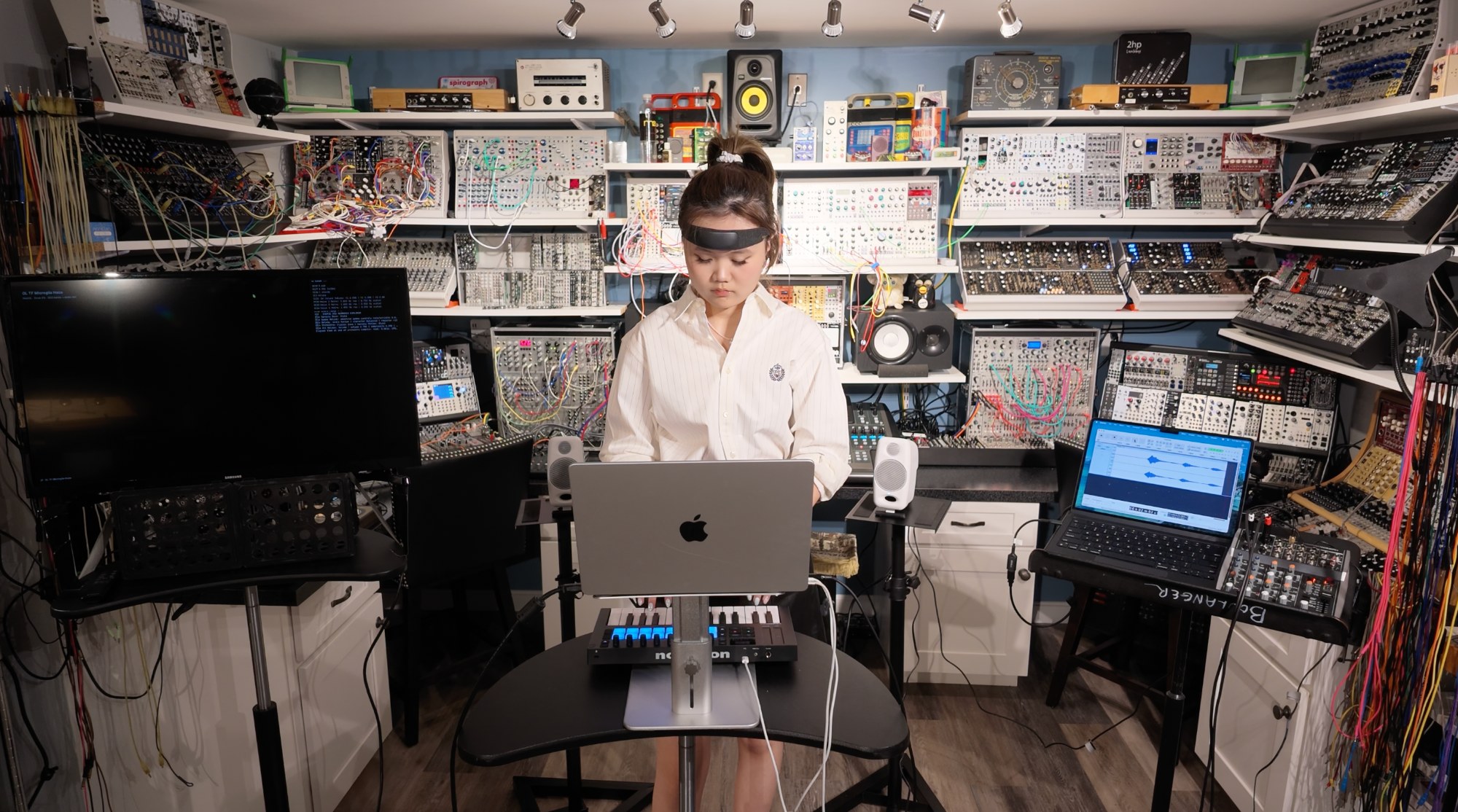
A system for making music with brain activity. I wear an EEG headband, and its signals become live music and moving visuals in the moment they happen.
I watched my grandmother, someone I love, lose the ability to speak. She was still there, but the words were gone, and with them our conversations. That silence left me with a question: how much can we feel and understand without words?
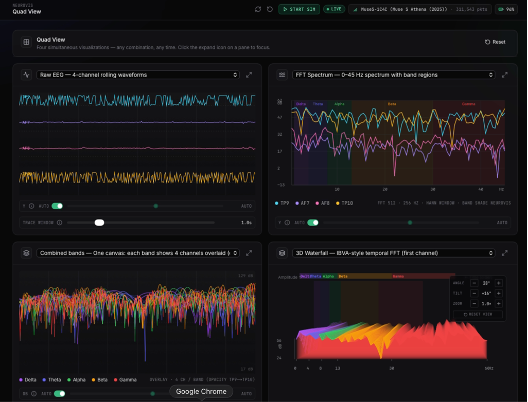
Four sensors, on the forehead and behind the ears, pick up brain activity from deep rest to sharp focus.
The data streams wirelessly over OSC, a protocol that lets music tools talk to each other.
Filters remove the noise of blinks and muscle movement, leaving only the brain’s signal.
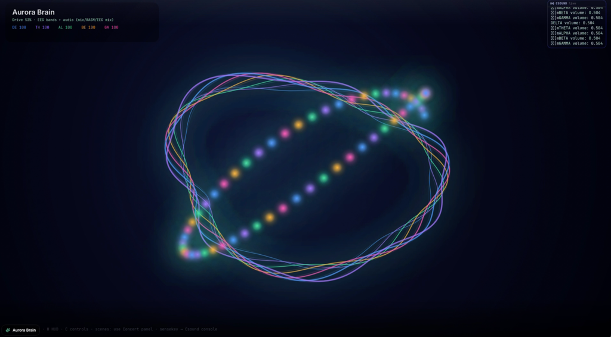
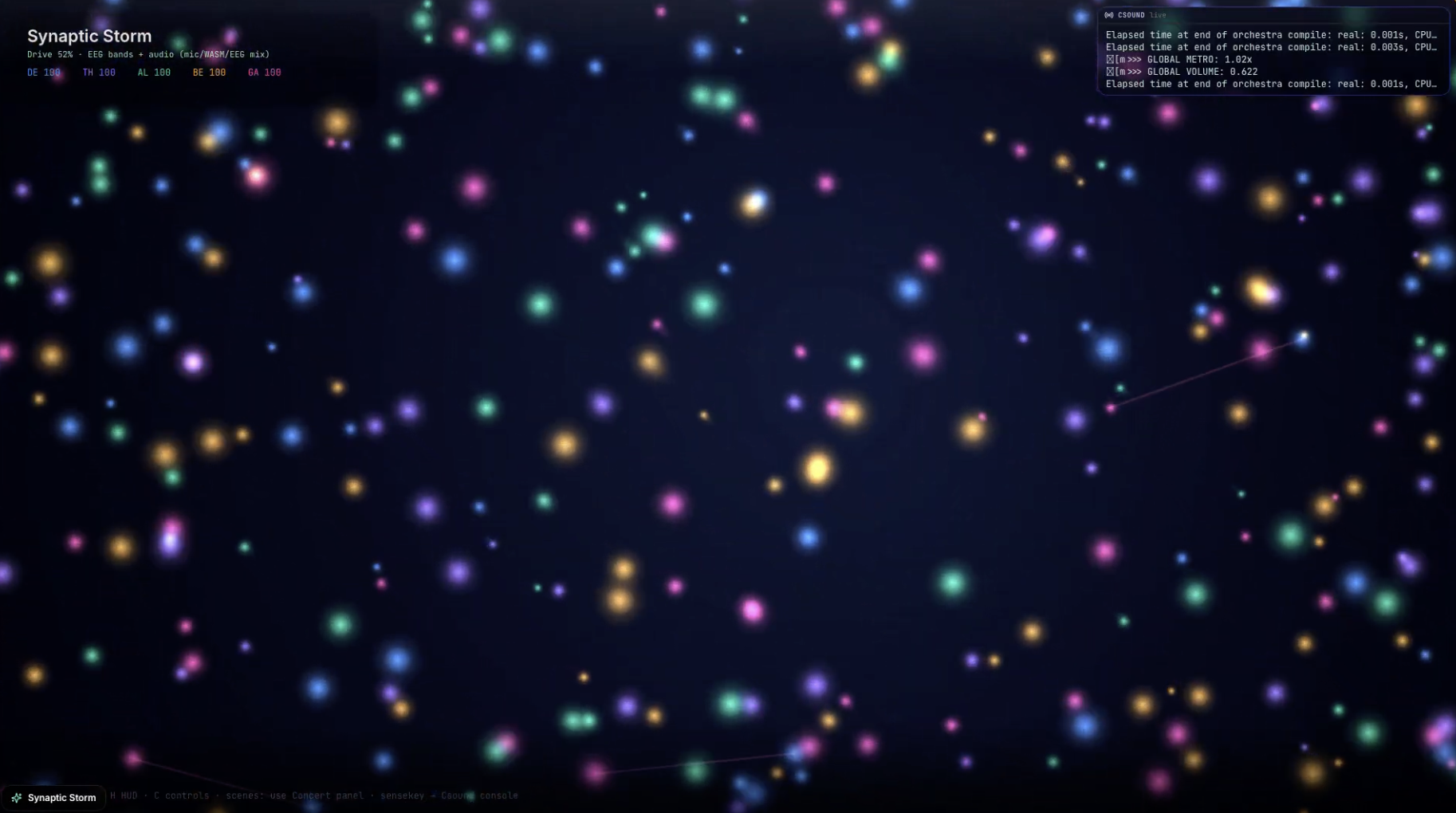
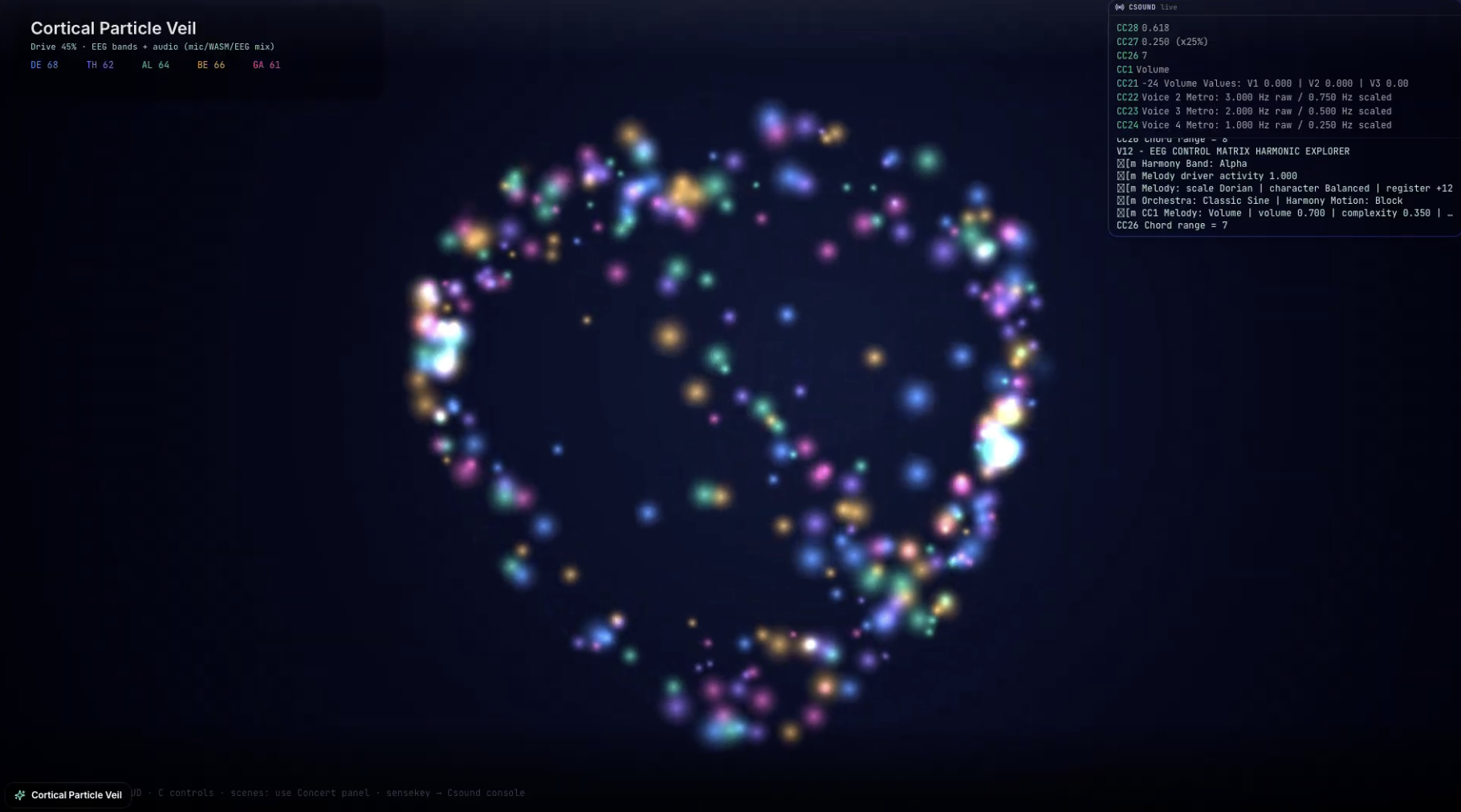
What remains drives the music and the moving visuals.
Brainwave data is only a starting point. I wanted to give it musical shape: music people can follow and connect with, without knowing anything about the technology behind it.
Each sensor has its own voice. Sometimes they sing separate lines; sometimes they join in four-part harmony.
Do different brains make different melodies? My family took turns wearing the headband, and their sessions guided how I refined the chords and chose melodies.
The brainwave music never stops, so the system includes a keyboard. The brain chooses the notes; the performer chooses when they’re heard.
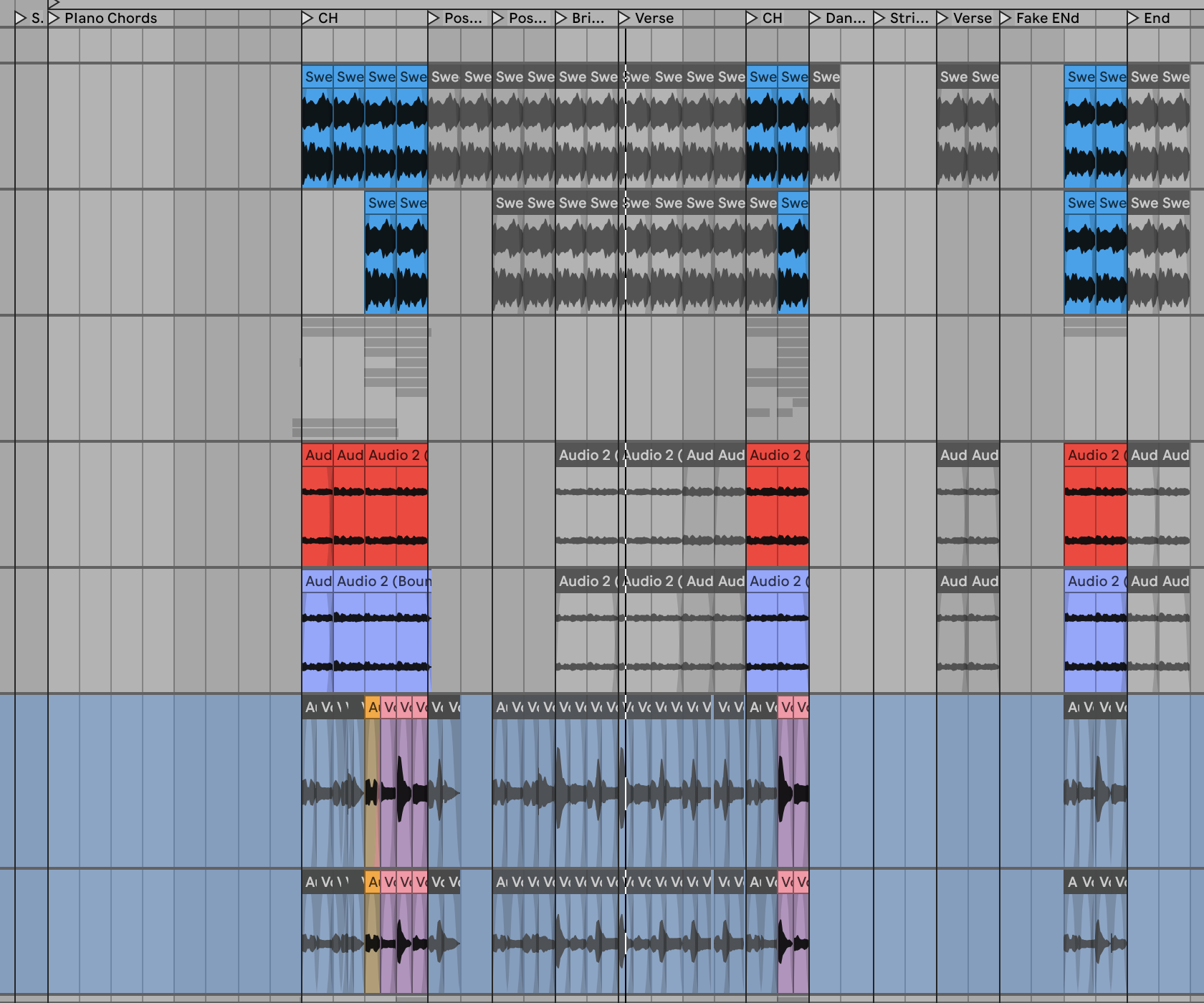
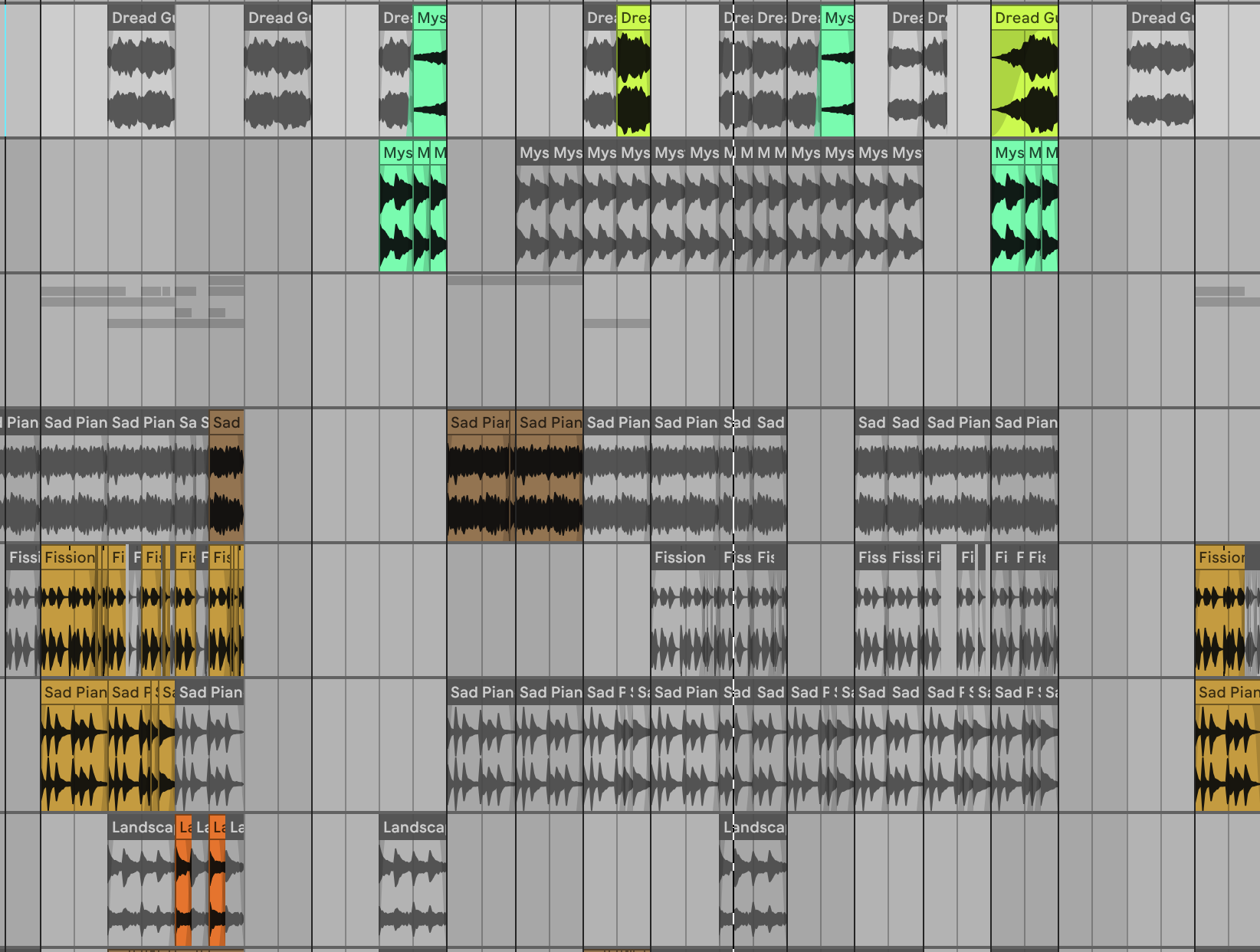
The piece moves from freely shifting arpeggios, through a chord progression, to a sustained, humming sound. At the start I shape the arpeggios with knobs, so the audience hears the most direct translation of changing brain activity. Clearer harmony enters gradually, and the sound slowly grows warmer.
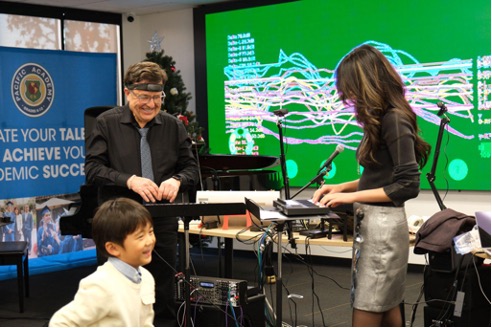
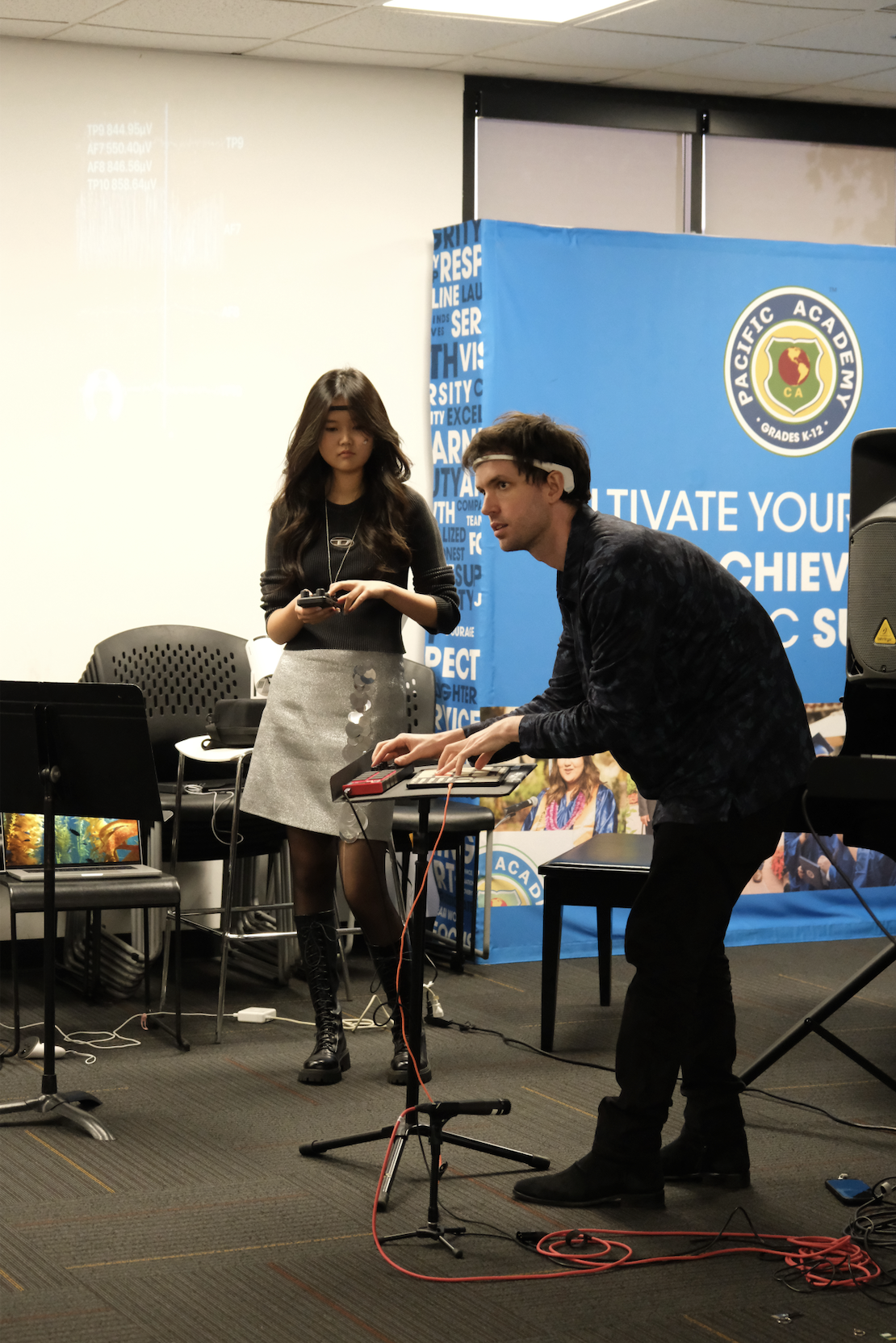
In CsoundBrain, my mentor and I each wear a headband and move through eight contrasting sound worlds. Because we listen to each other, my mind responds to his and his to mine; the harmony shifts with every passing thought. In a sense, we are playing with each other’s minds.
I used to express myself through piano and voice. Brainwave music opened a new door, and made me curious about what comes before expression: how attention, intention and perception shape the making of music.
A simple headband turned something invisible into something I could hear. It became a mirror, letting me notice what was happening inside me while it was happening.
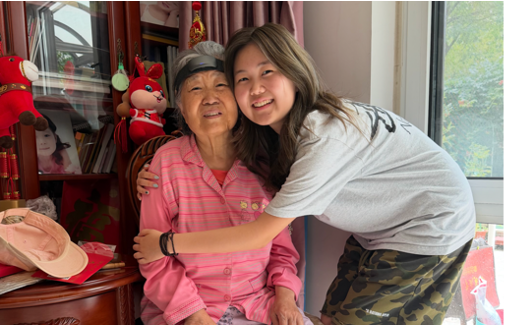
When I tried the system with my grandmother, she tapped the table and I answered on the keyboard. We began to communicate in a new way. The headband is no longer just a sensor that detects brainwaves; it is a bridge that connects people.
I want to understand how people find meaning in sound, and bring that understanding back into my work, so more people can express themselves, communicate, and feel joy.
QUEST
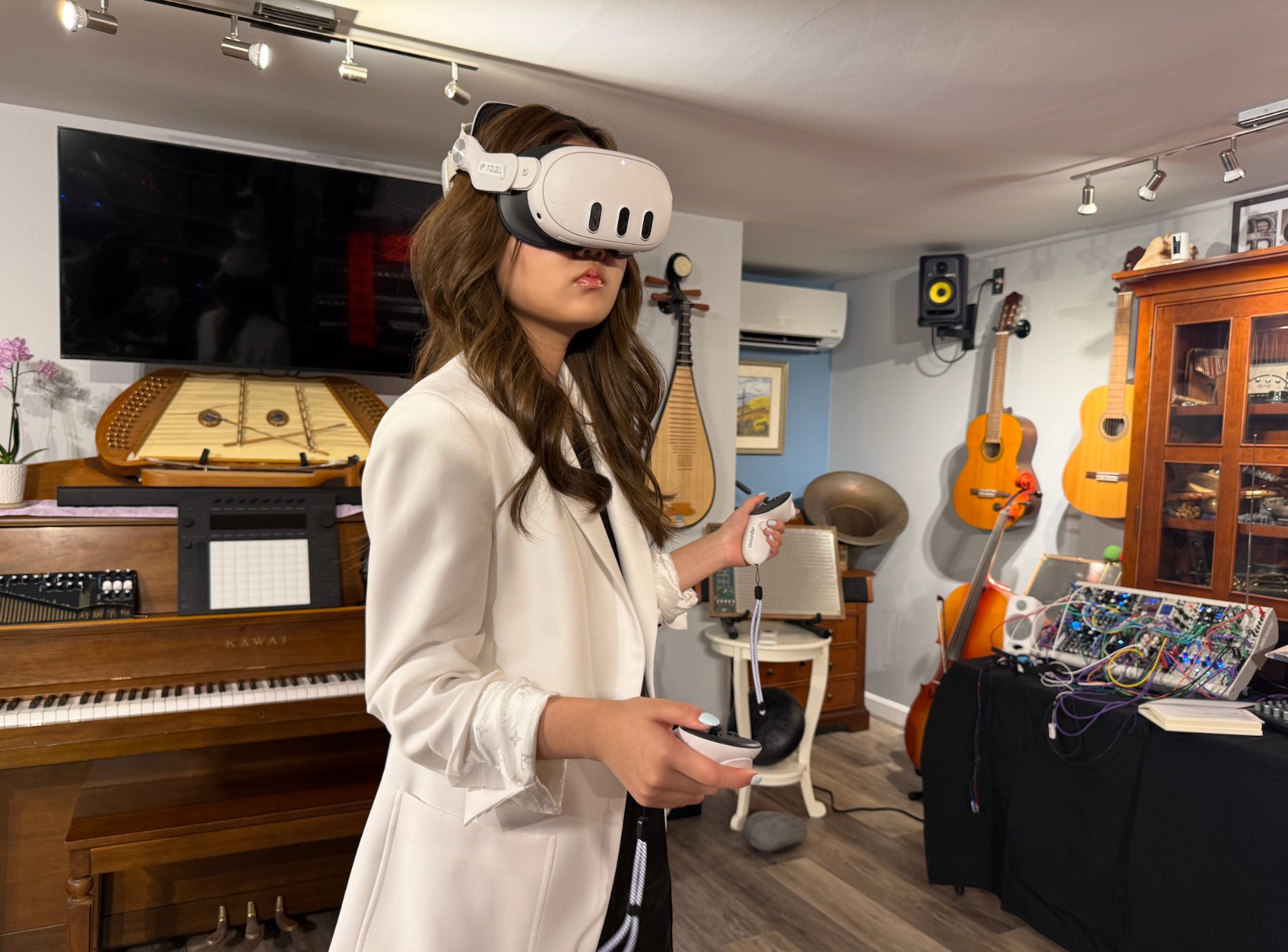
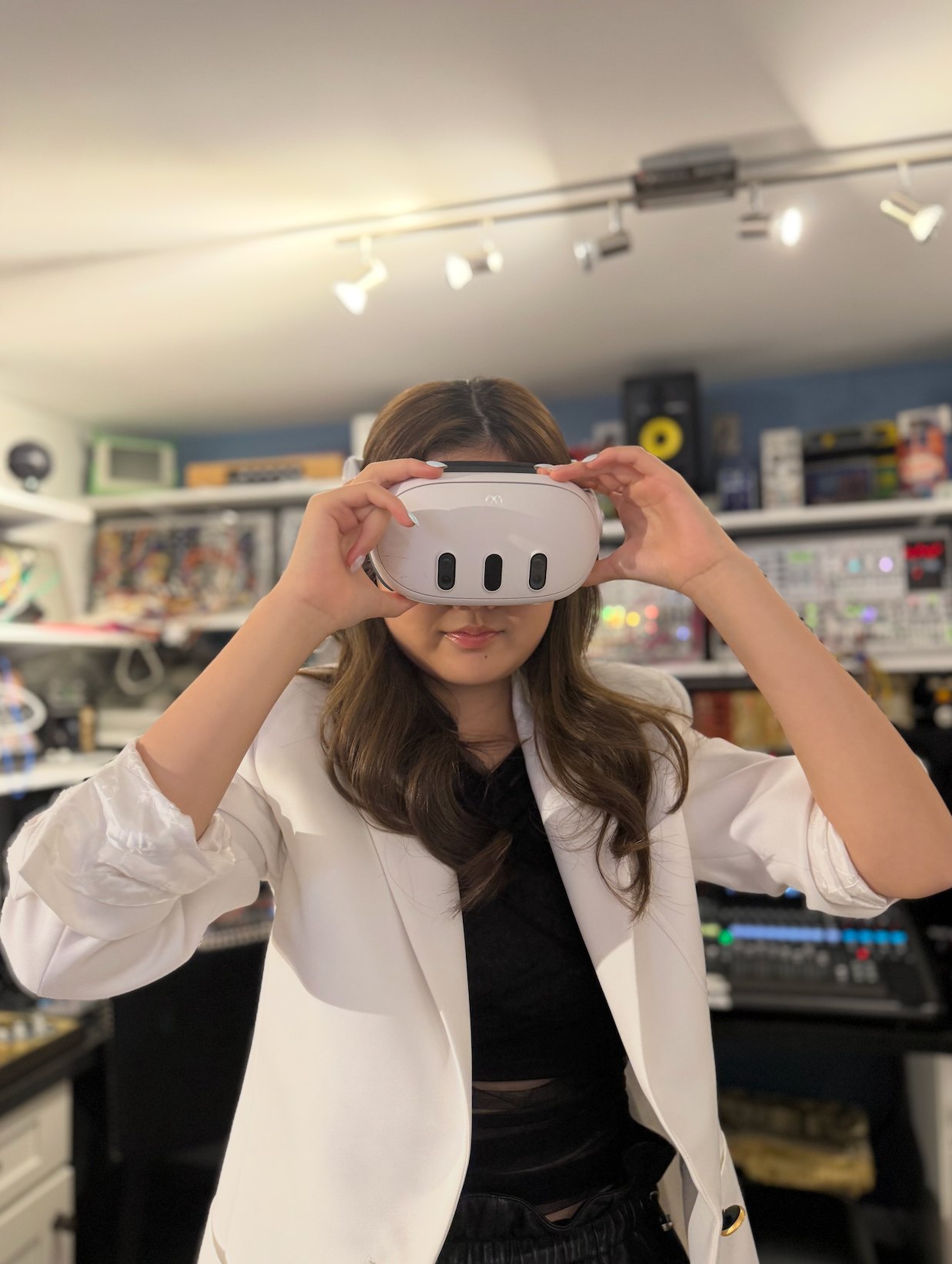
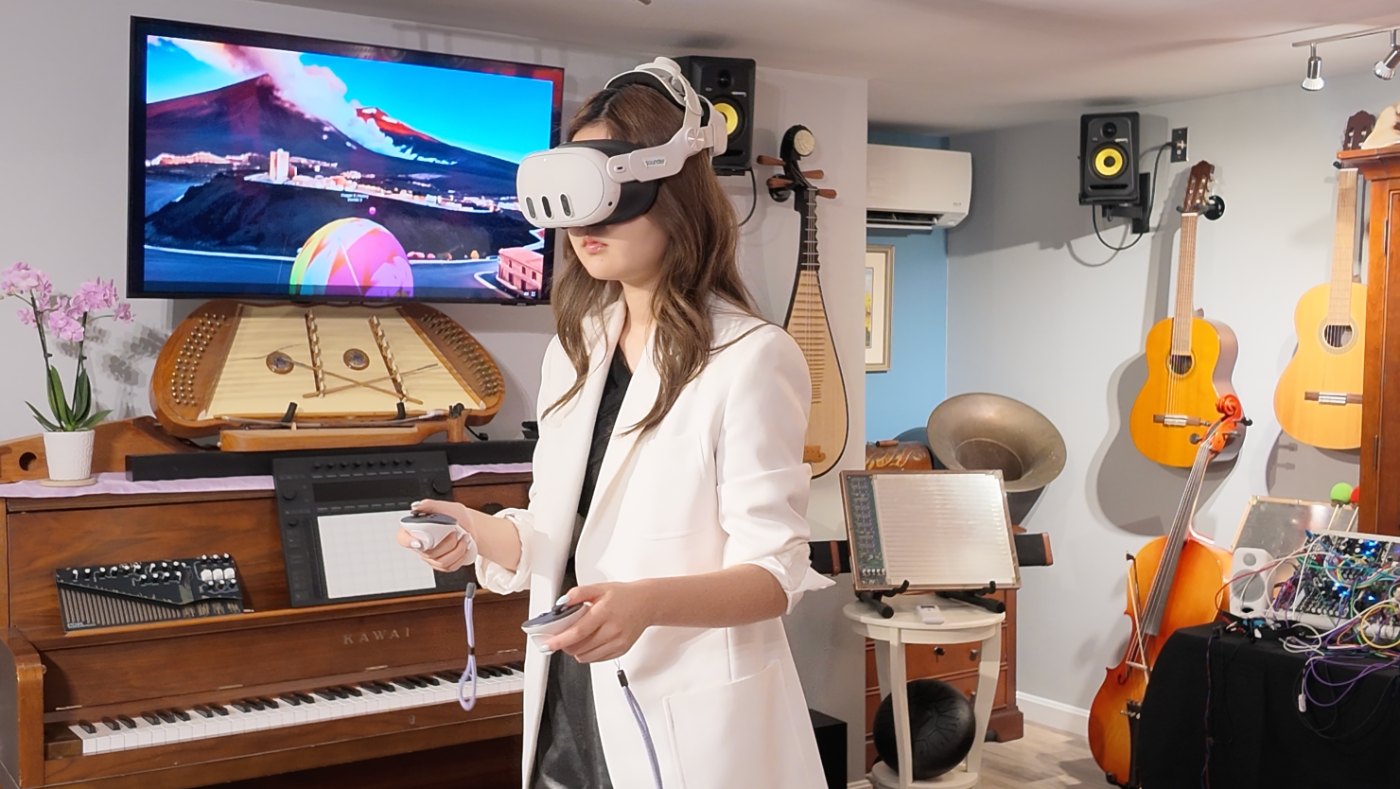
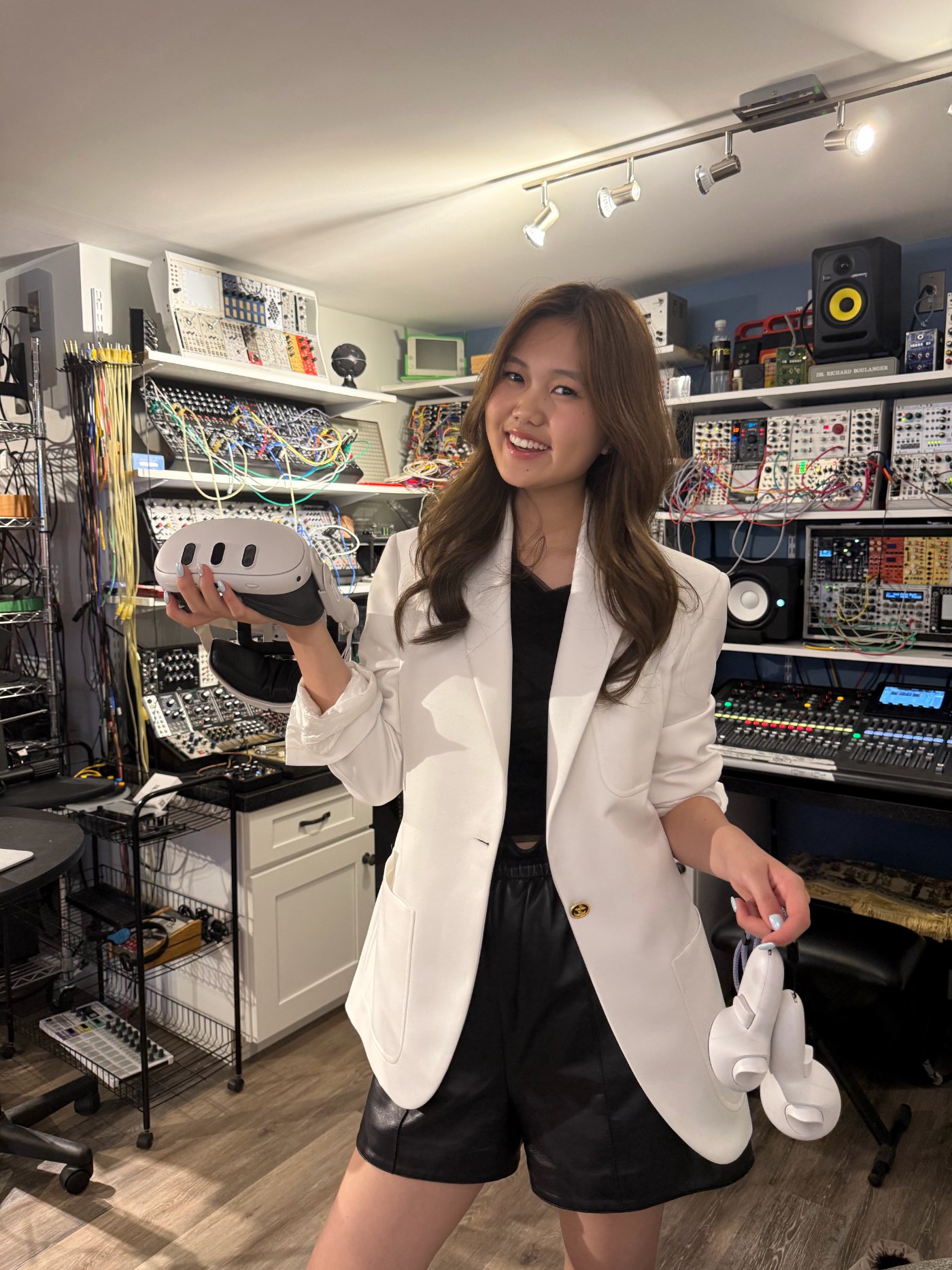
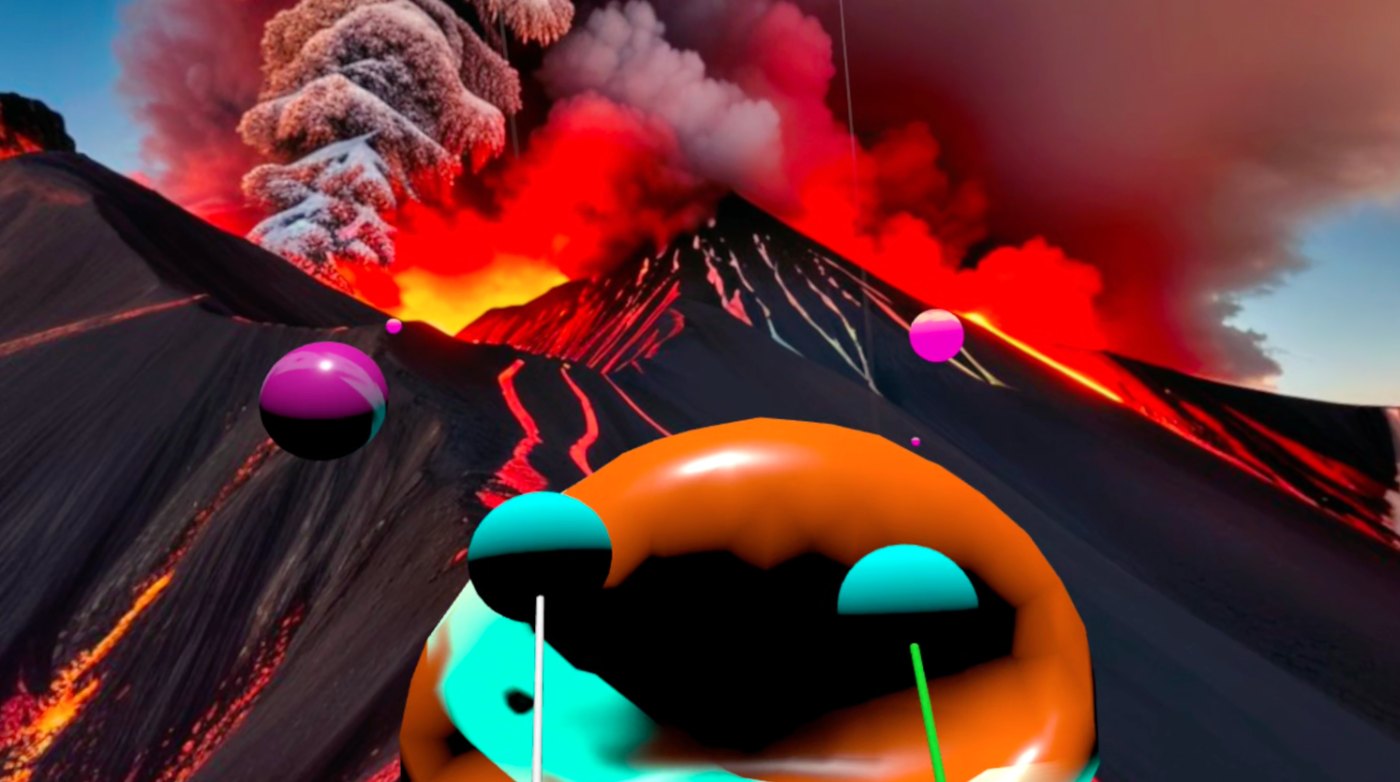
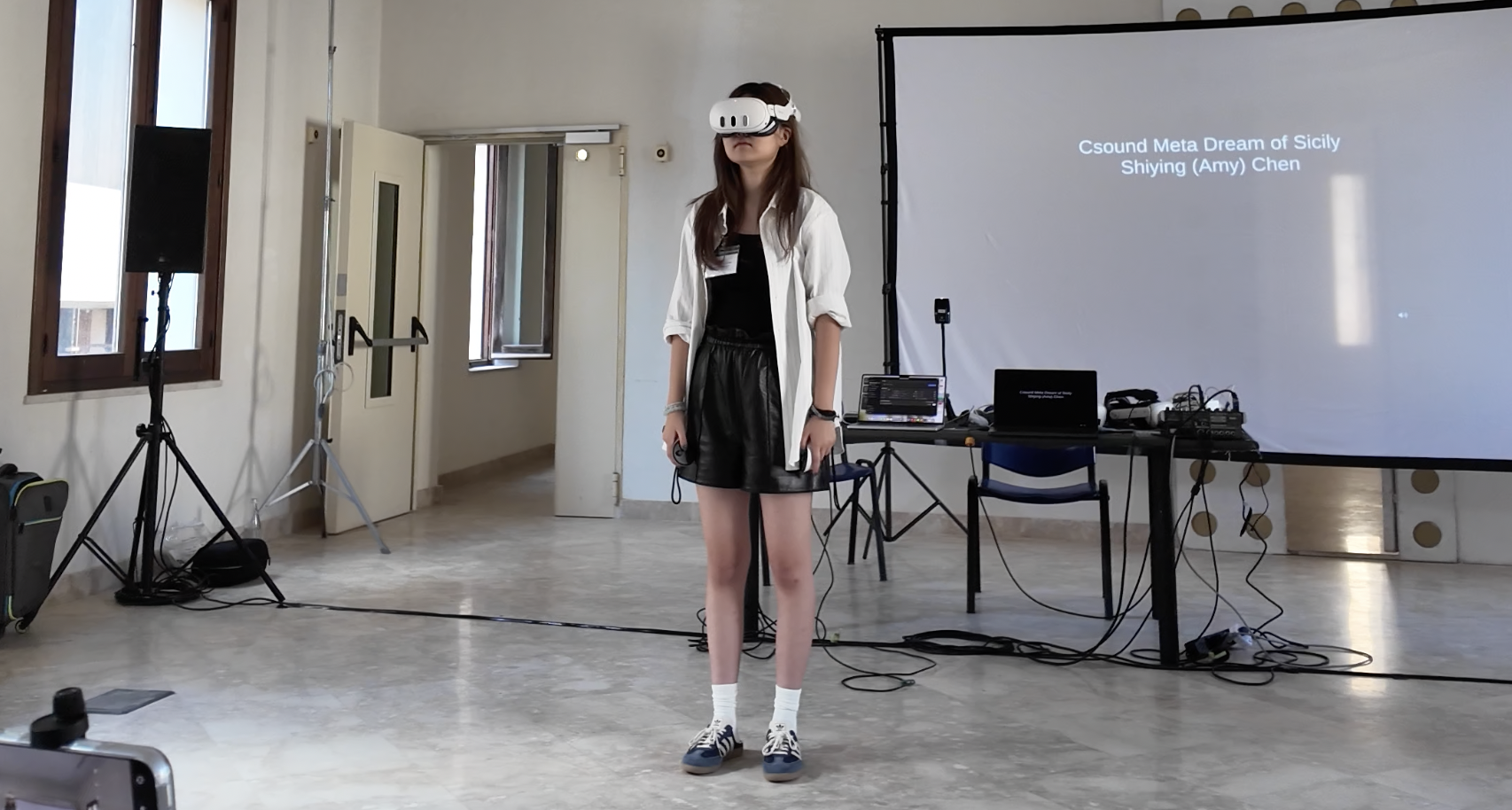
Immersive music you can step inside. Wearing a Meta Quest headset, the audience stands on the island of Sicily and reaches out to touch glowing orbs that create the music.
The piece reimagines the legend of Saint Agatha: a young woman who refused to be silenced, and whose red veil, legend says, once held back the lava of Mount Etna.
When I was invited to perform in Sicily, I wanted a piece rooted in the local culture. Mount Etna, and the legend of Saint Agatha protecting people from its wrath, gave me the arc: a tranquil coast, the turmoil of the volcano, and a final return to peace.
The story unfolds through colorful orbs the audience touches to activate. Some evoke the ocean; others build the atmosphere of the volcano.
Sicilian melodies and the sounds of traditional instruments give the experience its local character.
Visible throughout the piece, a red cube is the voice of Saint Agatha. As her voice enters, the surrounding sounds fade, so her protective presence is something you hear.
I designed the sequence of the work, the relationships between sounds, and the scenes that go with them, so every interaction moves the story forward.
Her power lies in how she changes the volcano’s music. As the red cube grows louder, it reshapes the sounds around it and leads the island toward calm. Through this, I wanted to present compassion as an active force: a woman’s voice has the power to change the course of a story.
In the headset, the audience’s bodies become part of the music. Where they reach and which orbs they touch decide what they hear. Being inside the sound, rather than facing it, lets the story be felt, not just understood. Each participant plays a part in the island’s return to peace, and leaves with a sense of hope.


PERFORMANCE
PERFORMANCE
SIGNALS
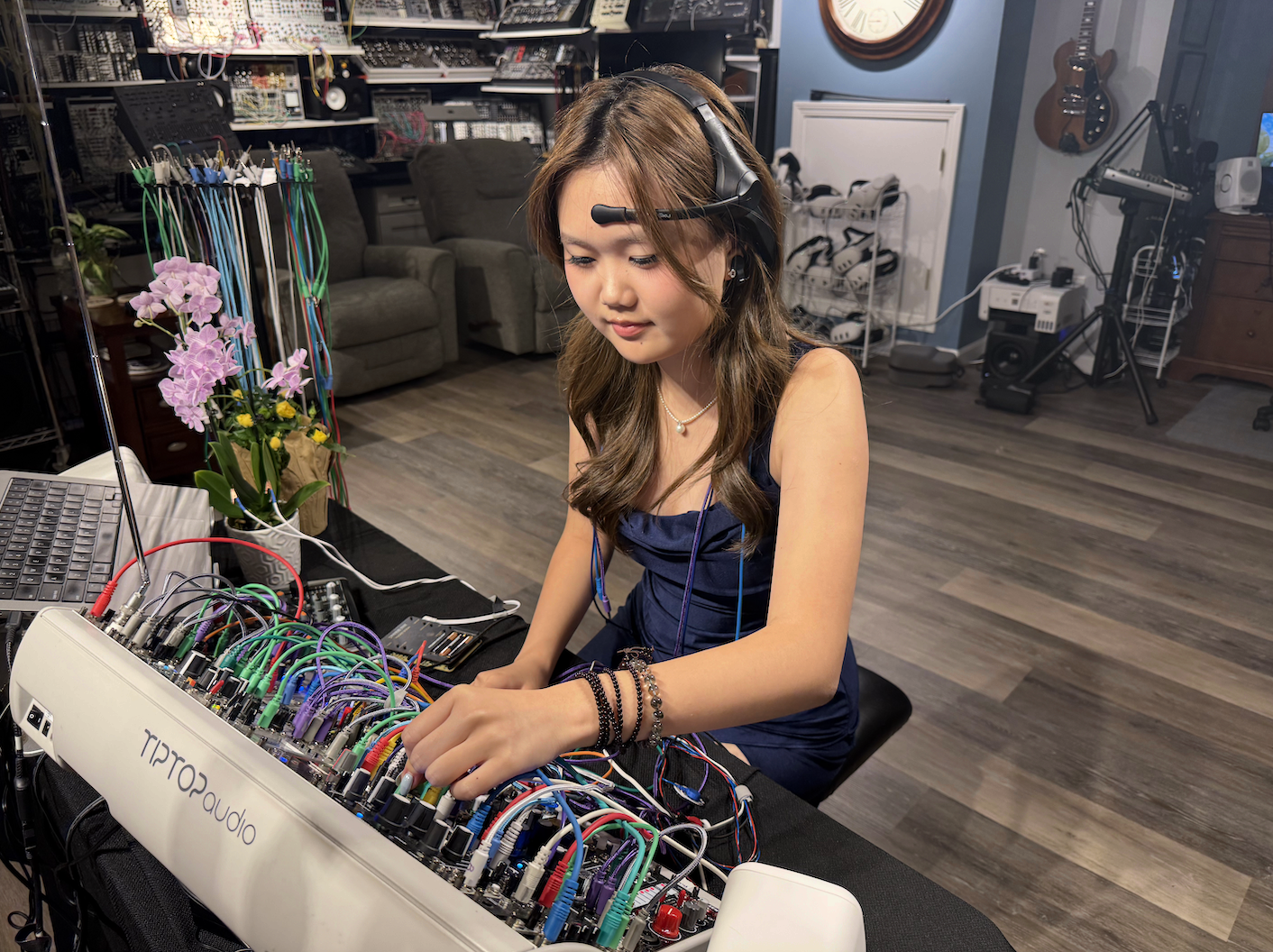
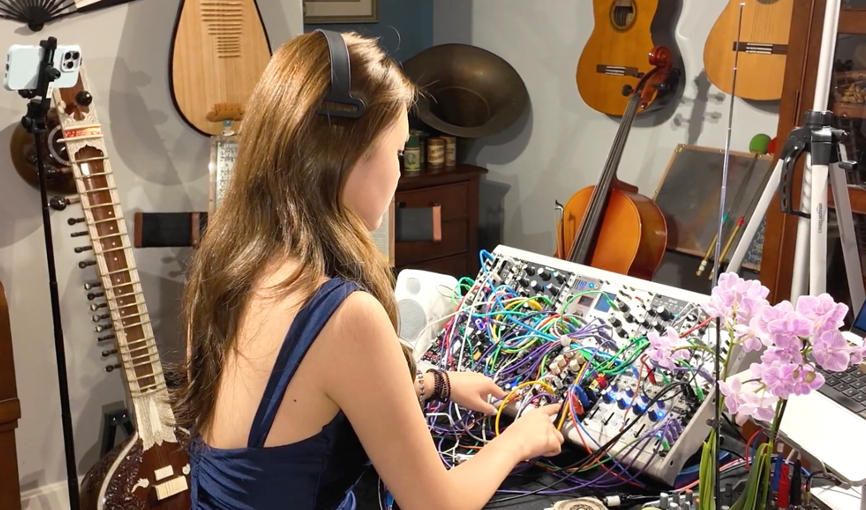
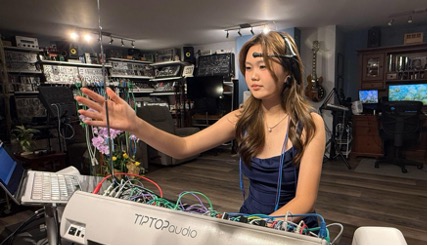
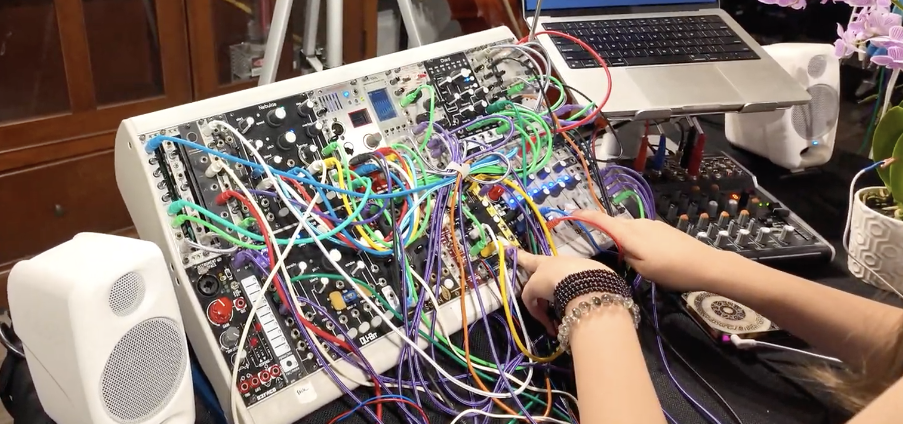
Can plants, brain activity and physical movement all play in the same ensemble? In this live piece a modular synthesizer brings them together. Each source takes a musical role on a journey through space, the ocean, a curtain of rain, and the forest.
My brainwave music work taught me that my brain has its own music. But the brain isn’t the only part of me that’s quietly active: my heart keeps a rhythm, my skin and muscles carry signals, and even the plant on my desk has faint electrical life. I believe music is a language that belongs to every living thing.
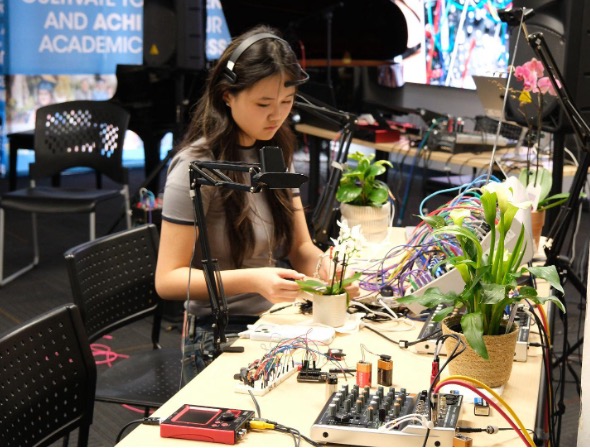
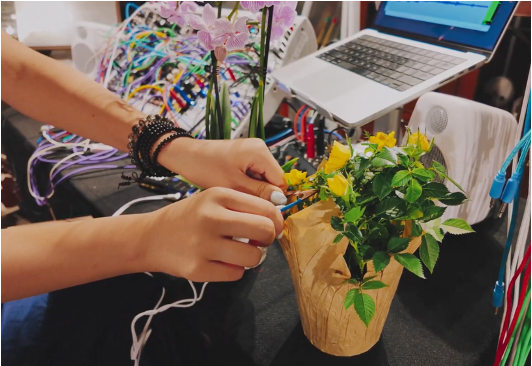
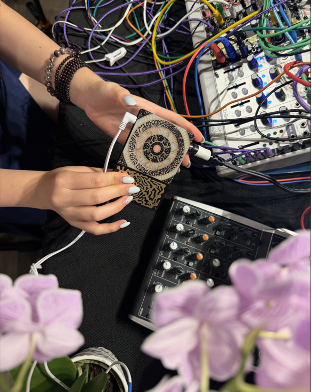
Two metal clips on a leaf turn the plant’s faint electrical signals into sound. Touch the contacts and it does the same with my hand: invisible biological activity becomes something you can hear.
Reads brainwaves, heartbeat, muscle activity, skin conductance and hand gestures, and reshapes sound in real time. With the plant sensor patched in, a plant and my brain perform together.
With my hands I build outer space: pressure on a touch sensor shapes the cosmic hum, and a theremin turns the distance of my hand into spacecraft signals. Falling back to earth, my brainwaves move the water like waves, and the plant deepens the layers as we sink to the ocean floor.
Moving my hand toward and away from a gesture sensor makes chirps like small animals. Blended with water, they become a whale breathing in the deep.
A talking sensor gives voice to a little frog, while my flowering plant becomes the storm swirling around it.
My brainwaves tune the pitch of birdsong; the plant adds texture and rhythm. The forest comes alive: busy, organized, and full of imagination.
I designed the transitions to give listeners a story they can follow. On stage I shape the sounds while listening for changes I can’t fully predict. In the video, each section is paired with images showing which sounds come from brainwaves, which from the plant, and which from gestures.
A plant can’t read a score, and neither can my brain. My task here isn’t to control every note, but to set the stage, listen carefully, and respond. A soloist usually treated as decoration became the key member of the band, a presence I had to attend to.
Hearing the sound change as my hand moved made me wonder how the brain learns the link between movement and sound. Designing and playing this instrument let me explore how listening guides our movements.
PRODUCTION
PRODUCTION TYLER KAUFMAN, AMY CHEN
VOCALS & CHOIR ARRANGEMENT AMY CHEN
LINK VISCERALDESIGNMUSIC.COM
MY ROLE CREATIVE DIRECTION, PRESENTATION LEAD
RESULT FINAL SHOWCASE
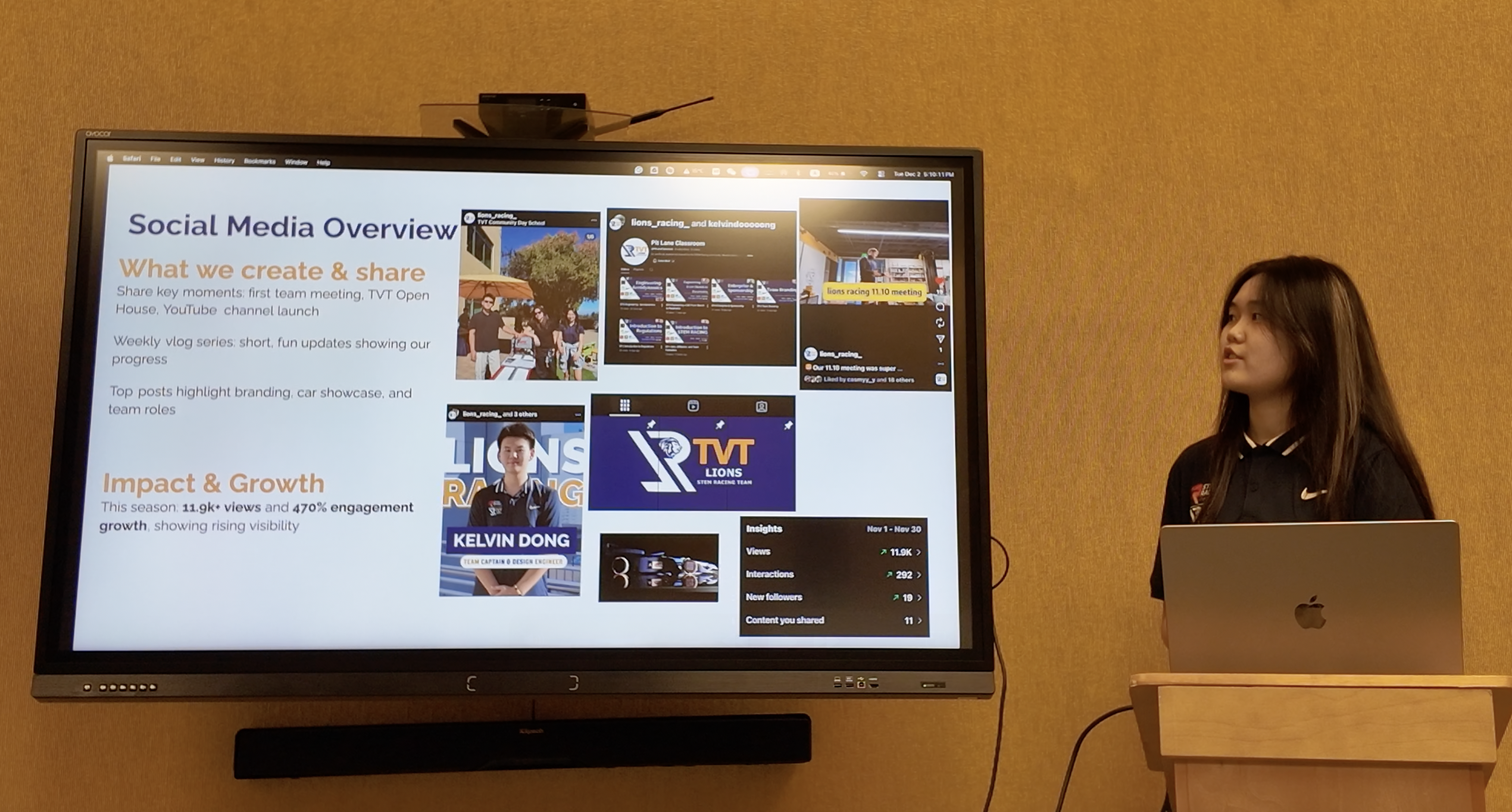
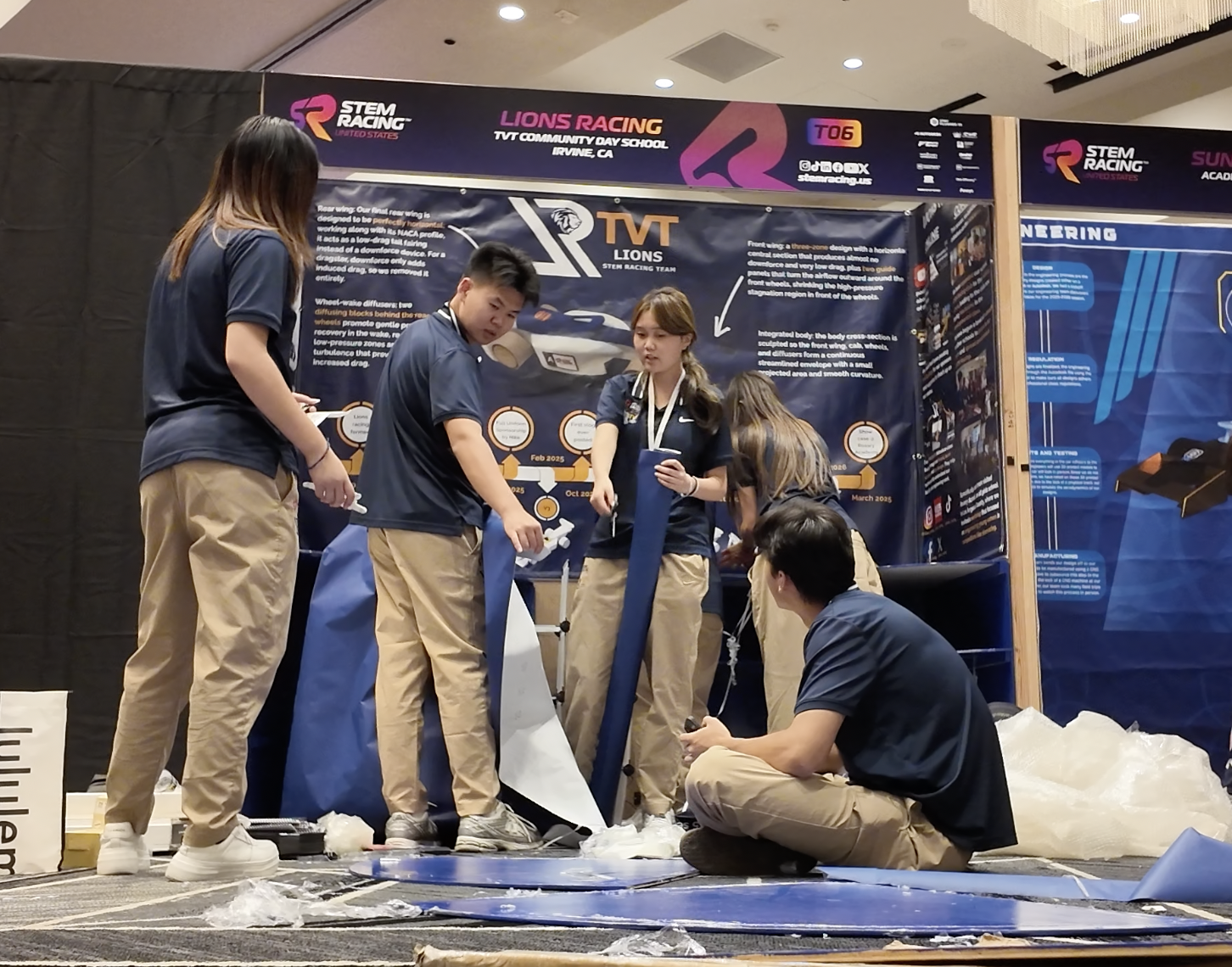
MY ROLE GRAPHIC DESIGNER & SOCIAL MEDIA LEAD
RESULT 1ST IN CALIFORNIA, 2ND IN THE WESTERN REGION, 6TH AT NATIONALS
(AMY) CHEN